

John Andrews Instructional Iridology CD-ROMS
Updated June 2010
These instructional CDs provide a comprehensive presentation for each subject – from a classical, international understanding through to the most modern and advanced thinking or findings in the field. The CDs cover unrivalled in-depth practical information.
They compliment the range of textbook titles by John Andrews, (see Publications) and are suitable for the student, practitioner, researcher and tutor in Iridology and related fields. The CDs are lavishly illustrated throughout with full colour digital images and contain on average over 160 slides for each one.
Many of the titles in the CD series carry new information within each subject that does not feature in any of John’s iridology publications. In addition to Iridology signs and their meanings the CDs also feature other diagnostic and therapeutic guidelines.

Feedback on John Andrews Iridology - Download Here
Technical Details
Once purchased viewing your CD is an easy process. They are compatible with either Apple Mac or PCs – as long as you have Power Point capabilities.
The Power Point software is part of the Microsoft Office Suite of applications.
The CDs are “Read-only” – once loaded, as the file opens you need to click “View Show”. Use your mouse or other control keys to navigate through the presentation. You can also print a copy of the presentation for your own clinical and research use.
All CDs range from 80 to 170 slides and 80MB to 180MB depending on the content.
Languages
All the Instructional CDs are in the English language. However, we aim to translate some of the material into Spanish, Italian & Portuguese. The Spanish language version of the Pure Brown Iris in Modern Iridology CD should be available from Spring 2010 and the first Portuguese version later in 2009 to coincide with John's lecture visit to Brazil in November 2009.
Bulk Discounts on CDs
You can purchase individual CDs, but you may wish to take advantage of the Bulk Discount Offer – when you purchase six CD titles in the series – you will only be charged for five titles. Prices shown exclude VAT.
* Course instructors please enquire for bulk amount discounts for your students.
New Instructional CD Titles to be made available in February 2009:
- Available Now - The Pure Brown Iris in Modern Iridology - See below for purchase details. Download PDF here
- Immune Cell, PNEI Collarette Foundation Chart CD (to accompany the Immune Cell Collarette Chart)

|
John Andrews Advanced Iridology Seminar, Las Vegas, June 2007
The themes & research on this CD help to expand the boundaries of modern iridology practice. The original Immune Cell, Collarette & Psychoneuroendocrinoimmunology (PNEI) Foundation Chart research material was first presented and explained in detail by John Andrews at the Advanced Iridology Research Seminar in Las Vegas, USA in June 2007. John was awarded with the 2007 Iridologist of the Year Award by the International Iridologists Practitioners Association after this seminar at the IIPA Symposium.
This Instructional CD is accompanied by the chart and basically comprises three presentations (three for the price of one) from John’s two day seminar and is lavishly illustrated with the latest iris images and collarette research at the time.
Linking together many different exciting and dynamic facets new to modern iridology, but with a practical foundation for the practitioner, clinician and iridology instructor.
This new Collarette Immune Cell Chart was released at that time and is now used with success by iridologists in over 30 countries around the world - if you were not able to attend the seminar in June 2007 this Instructional CD & Laminated Chart package is your way of accessing much of this original material and is essential for those incorporating immunology, PNEI, PNI, chronic fatigue support, emotional dynamics in iridology, Time Risk (after Lo Rito), iris chromotherapy, colourpuncture, cranio-sacral therapy, flower remedies, homeopathy, homotoxicology, emotional embryology, Heart Math, counselling or NLP-related fields into their respective practices. This chart integrates with John’s Emotional Dynamics of the Collarette Chart that was first presented at the Embryology & Iridology - New Topographical Research 3 Day Seminar with Dr Daniele Lo Rito & John Andrews in Italy in May 2004. It will also combine with the new embryological topography of the pupillary zone. In addition to this the topographical understanding of the inner pupillary border plus the new Iris & IPB chart incorporating the extra-cellular matrix, DNA, the Cell & SNPs Research Chart by John Andrews.
*Alternatively you can purchase The Collarette, Immune Cell & Psychoneuroimmunology Foundation Iris Chart individually click here. |
|
The Pure Brown Iris in Modern Iridology by John Andrews
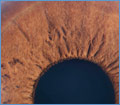
*NEW CD This Cd is essential for those working with any patients with brown irises. This is an extensive and comprehensive instructional CD from John Andrews covering the often over-looked details pertaining to the pure brown iris (Haematogenic Iris Constitution) from the modern iridology research & practice perspective. There is a paucity of accurate and detailed information in the iridology literature to date for the pure brown iris – until now! With the use of lavish high resolution digital imaging the general and specific important signs and markers for the brown iris are covered in detail with text from John Andrews and areas highlighted in the images so there is a high degree of instant understanding & practical application. Signs specific for the pure brown iris are featured in addition to the importance of certain collarette, pupillary zone, corneal and inner pupillary border signs for the pure brown iris – based modern iridology research. Apple Mac users may wish to request the Keynote version of this presentation when they order or email in advance. * If you require the Portuguese language version please email us here |
| Nashville Presentations CD £65 This CD includes John's two full keynote presentations in Nashville, February 2006 for IIPA. 1. Immunology & Iridology 2006 with John Andrews 2. Clarification & Synthesis of Classical and Advanced Practice in Iridology Includes colour images - 425 slides in total. |
|
| Guild of Naturopathic Iridologists Symposium March 2006 £30 This is a comprehensive CD of John's presentation from the Guild of Naturopathic Iridologists Symposium held in London, March 2006. 1. Embryology & Iridology – New Research with an Endocrinological Bias This includes over 150 slides as shown at the Symposium. |
John Andrews - Instructional Iridology CD-ROMs available for purchase:
Series 1
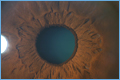 |
Introduction to Iridology £41 180 slides 120MB Subjects covered include Iridology history overview, prominent iridologists and their work throughout the world, Topography, iris chart examples, outline of modern iridology training essentials, brief constitutional types, Iridology myths & challenges, iris textbooks, what we cannot detect through iridology, neuroendocrine pathways & the iris, the importance of the hypothalamus, lateral geniculate bodies & the iris, aniridia, the iris used in biometrics, the stress axis, thyroid axis, depression axis, iris development, iris pigments, spinal analysis & iridology, sections of the eye & the iris, iris signs introduction, embryological development of the iris, transversals and much more - the first steps in modern iridology. |
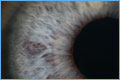 |
Differentiation of Lacunae & Crypts £41 159 slides 96MB Interpretation of the lacuna & crypts, genetic footprints, which organs or tissues do not produce lacuna in the iris, frequency of the topographical location of lacuna in the iris, differentiation of the following lacunae - closed lacuna, open, one-sided, rhomboid, lacuna with crypt, lacuna with pigment, lacuna with collarette indentation, solitary collarette lacuna, Endocrine/Polyglandular types, jellyfish, asparagus, beak, giant, thymus, adrenal, ovary, thyroxine lacuna, shoe, heart, silver fibre, Stairstep, internal lacuna, cryptoids, Daisy petal, double, divided, distorted, torpedo, circular, leaf, negative & many more. |
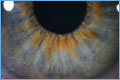 |
The Collarette £41 140 slides 165MB John Andrews is considered a world authority on the iris collarette.The fundamental & advanced importance of the structure & integrity of the collarette is covered in detail with the multiple dynamics associated with restricted collarette, various types of distended collarette, zigzag, partial zigzag, local indentation, cat’s ears, linear, pigmented, mixed, sea foam collarette, squared collarette, frontal indentation, DNA predominance, emotional dynamics, vascularised collarette, collarette point, triple, double, bridges, Koch’s sign, atrophy, thin or hypotrophic collarette, hypertrophy, funnel sign, protuberance, Arched collarette, epigenetics and new research with the collarette. |
 |
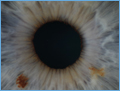
Miscellaneous Iris Signs £41 156 slides 102MB Following peripheral, solitary or transient iris signs covered in detail include Mammilations, pupil shadow ring, Brushfield’s spots, Lisch nodules, White radials, vascularised vessels, vagus nerve signs, Ciliary neuron networks, pupillary zone neuron networks, differentiation of contraction furrows, skin rings, stromal rarefaction, fish hooks, helix vessels, gastric rings, visible pupillary sphincter, corkscrew vessels, combed hair vessels, radial furrows, lymph cords, iris veins, the mesenchymal acid barrier signs, therapy resistance, Brushfield’s spots transversals, white pupillary sphincter, emotional dynamics, vessels & ophthalmology plus much more. |
 |
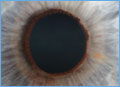
Hypoglycaemia & Iridology - Balancing Blood Sugar Levels £41 170 slides 162MB Extensive exploration based on research with 1500 clinical cases – there is overviews & specifics with research plus, blood sugar signs & symptoms, embryology, treatments, iris, IPB, scleral signs based on the research. Lavishly illustrated throughout – the work presented here, like so many of John’s lectures, has been impressively received throughout the world. |
 |
The Pupil in Modern Iridology £41 122 slides 50MB Differentiation of mydriasis, miosis, Anisocoria, idiopathic alternating Anisocoria, hippus, pupil ellipses, pupil tonus, Coloboma, white pupil syndrome, cat’s eye pupils, wedge-shaped pupils, raised pupils, circular pupils, plus what is the pupil, normal values of the pupil, the most prominent pupil types, Axenfeld-Reiger Syndrome, emotional & physical dynamics of all. |
Series 2
 |
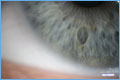
Differentiation of Iris Pigmentation £41 120 slides 140MB Life and the eye are full of colour – but we need to have an-depth knowledge of the iris pigment development, location and differentiation. This CD helps to challenge myths about iris pigmentation. Pigment types covered include brown, orange, yellow (differentiation of dysbiosis, splenic, renal, histamine & EFAs factors), black, punctate/peppercorn pigments, spleen pigments, Pathochromia (“Psora”), central heterochromia, Sectoral Heterochromia, pigments & pain, medical reasons for changes in eye colour, prominent topographical location of iris pigments, hedgehog pigment, bush pigment, waterfall pigment, solitary pigments, pigments with other signs, emotional qualities of the pigment and much more covered in unrivalled practical detail. |
 |
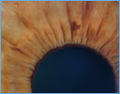
Profiles of Polycystic Ovary Syndrome Research in Modern Iridology £41 80 slides 50MB This is an extensive exploration of all facets of the increasing incidence of Polycystic Ovary Syndrome (PCOS) with iris & inner pupillary border signs, pupillary dynamics and treatment protocols. Essential reference for those with hormonal system and gynecological patients. |
 |
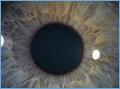
Identification of Spinal & Neuromuscular Concerns in Iridology £41 60 slides 70MB The supposed ciliary iris spine topography has proven to be unreliable and insignificant as a method of assessing and identifying neuromuscular spinal problems or injuries. The inner pupillary border is a more reliable method of identification. Combined with the pupil, the IPB points to a dynamic and accurate interpretation for the practitioner. Charts, signs and new research are all covered this instructional CD is ideal for iridologists and for all involved in structural or physical therapies. |
 |
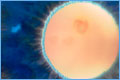
Overview of Emotional Approaches in Modern Iridology £41 160 slides 170MB Overview of emotional approaches in iridology, pioneers in the field, identification of mother & father conflicts, differentiation of time risk signs, emotional dynamics of the lacuna, pigments, collarette, Brushfield’s spots, central Heterochromia, white radials, transversals, the structure of water and the eye, identification of betrayal, anger, resentment, etc from the iris and much more. |
 |
Introduction to the Inner Pupillary Border £41 150 slides 170MB John Andrews is considered a global authority on the Inner Pupillary Border. This CD is an in-depth and comprehensive intro to provide accurate analysis of the inner pupillary border (IPB) – the emerging future of Iridology! Topics covered include anatomy, neural connections, overview of the IPB, pioneers in IPB research, differentiation of IPB diameters, IPB pigments, IPB pigment dispersion syndrome, Psychoneuroendocrinoimmunology, epigenetics, IPB topography, differentiation of IPB morphologies such as claws, pearl, wave, globular, the importance of the frontal IPB structure, neurolappen, omega, fencepost, squared, button hole, blood sugar, anchor, borderline, double, absent section, detached IPB, triangles, undulation, S sign, M sign, V sign, tonsil sign, osteoarthritis signs plus much more. |
 |
Transversals in Modern Iridology £41 80 slides 90MB Transversals are one of the most important peripheral, Ciliary or miscellaneous iris signs, hence an instructional CD of their own. Transversals covered include fork, antlered, tent, vascularised, hepatic, spleen, spleen-heart, blue, root, sack, criss-cross, wedge-shaped, exudative, Brushfield’s spots transversals, roof, fountain, intestinal, superficial, multi & deep branched, meander, uterine, submerged, curved, connecting & emotional dynamics. |
Series 3 (October 2010)
• The Importance of the Hypothalamus in Health & Modern Iridology
• Autoimmune Profiles in Iridology
• How to Conduct the Modern Iridology Examination
• The Importance of the Axis in Modern Iridology - Connecting Signs & Systems in the Iris & Inner Pupillary Border
• The Central Clinical Role of Prolactin & the Identification of Prolactin Imbalance in Modern Iridology
• The Liver in Modern Iridology - Iris Signs, Clinical Correlations, Systems & Therapies
If you require further information, please email John Andrews at johnandrewsiridology@hotmail.com with your questions or comments.